Chemical & Physical Peptide Analysis
It is one reason correct peptide storage and reconstitution techniques issue. Partial peptide fragments can arise from insufficient synthesis or post-synthesis degradation. These pieces are usually smaller than the target peptide and might elute at various retention times.This degree of thorough evaluation guarantees the peptide's precision-- indicating the sequence and pureness are precisely as identified-- which is essential for experimental reproducibility. By validating composition with numerous verified approaches, laboratory recognition assurances that researchers receive a high-purity peptide that will execute as anticipated in the lab. Lab recognition of peptides is not only a scientific ideal technique-- it's often a governing demand when peptides are made use of in therapeutic advancement or professional research study.
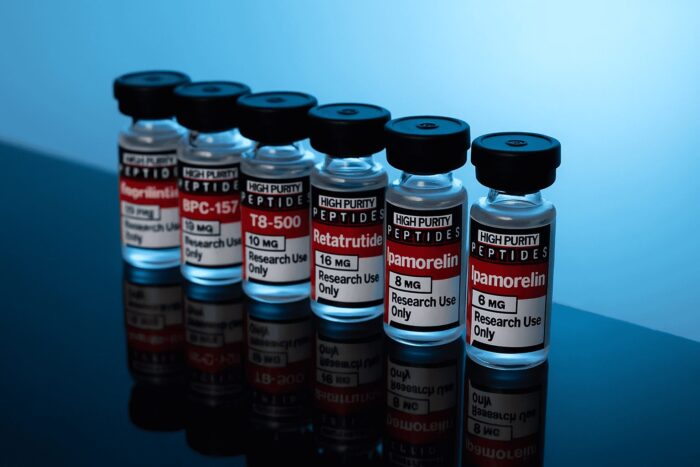

Study Uses Peptide Chemical & Physical Evaluations
- Sequencing permits scientists to recognize the biological duty of the peptide and its interaction with various other particles, assisting in the style of practical peptides for varied applications.Together, HPLC and MS information enable experts to verify that the peptide's structure matches what it should be (proper amino acid series and expected modifications) and that no substantial pollutants are present.Methionine can be oxidized to methionine sulfoxide; cysteine can form unwanted disulfide bonds or be oxidized to sulfinic or sulfonic acid derivatives.If the target peptide's top make up 99.1% of the overall height area, the peptide is reported as 99.1% pure by HPLC.
Determining peptide pureness is typically performed with logical high-performance liquid chromatography Body Protection Compound 157 (HPLC), usually paired with mass spectrometry (MS) for identification verification. These logical techniques are typical in peptide quality assurance and you will certainly usually receive HPLC and MS information with a research study peptide order. The main logical techniques for peptides consist of liquid chromatography (LC), normally HPLC, combined with mass spectrometry (MS) for precise molecular weight determination and sequence validation.
Conventional Pureness (≥ 95%)
Explore our brochure to watch validated research study substances and learn more about our screening and quality control procedure. Also small pollutants can alter results, decrease reproducibility, or present undesirable variables into a research study. Researchers depend upon precise, verified substances to ensure their searchings for are both legitimate and constant.
We utilize GC-MS, ICP-MS, and other approaches to detect contaminations, making sure product safety and regulative conformity. Peptide sequencing is essential for determining the exact amino acid sequence of peptides, including adjustments like phosphorylation or acetylation. Sequencing enables scientists to understand the organic role of the peptide and its interaction with various other particles, helping in the style of practical peptides for diverse applications. The peptide example is liquified in a suitable solvent and packed right into an autosampler.
HPLC informs you what percentage of your example is the major substance-- yet it does not verify what that major substance actually is. An optimal with the ideal retention time might in theory be an associated peptide with comparable hydrophobicity. Mass spectrometry offers identification confirmation by gauging molecular mass directly. We evaluate peptide size, series make-up, expected molecular weight, adjustment type, salt kind, sample background, and designated downstream usage prior to defining the analytical path. HPLC can show the existence of additional heights; LC-MS can help assign most likely identifications to those associated types. Oxidation changes molecular homes and can move retention habits, producing distinctive chromatographic peaks or related mass shifts. Together, these tools supply a clear and thorough photo of peptide structure, guaranteeing scientists can trust their data. Kai is the lab's AI study assistant-- powered by Claude (Anthropic) and GPT (OpenAI)-- in charge of technical writing, literature evaluation, COA verification, and substance analysis.