Peptide Pureness Evaluation Service
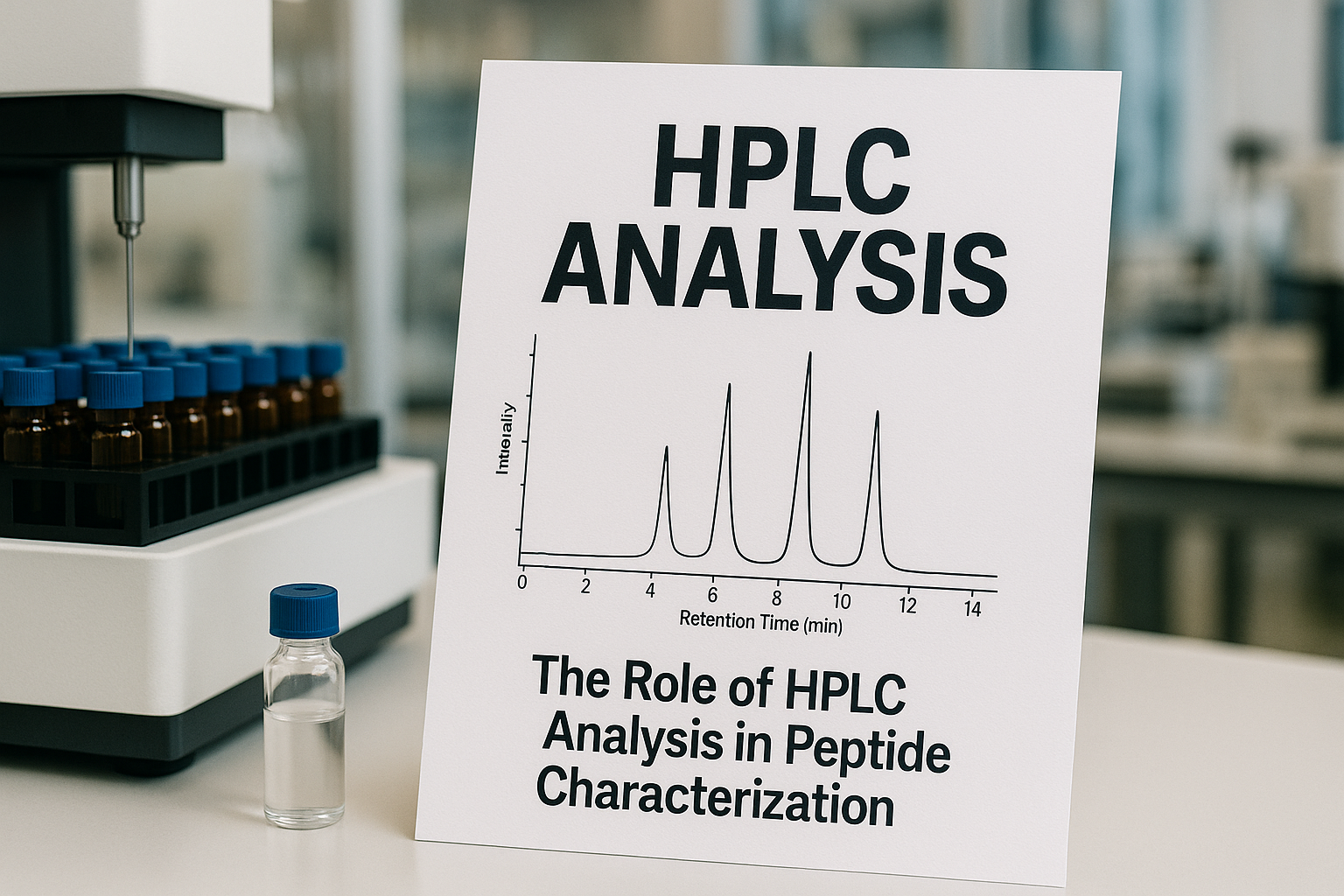
Imaginative Peptides recommends a collection of various pureness degrees to assist you choose the right peptide pureness for peptide-based assays and applications. The following listing shows the recommended peptide purity levels required for various peptide applications. Peptide identification is mostly performed making use of mass spectrometry (MS), which offers accurate dimensions of peptide molecular weight. In addition, strategies such as amino acid analysis and HPLC are utilized to confirm the peptide's identification and purity, making sure exact characterization for different applications. We offer peptide identification confirmation using mass-based approaches chosen for the example and analytical purpose. This is important when the major question is whether the observed component matches the intended peptide or whether a modification has been incorporated as anticipated.
Crude, Desalted, And High-purity: Recognizing Peptide Grades
For researchers, getting verified peptides isn't just a rule-- it's the structure of trusted experiments and study reproducibility. Poor-quality peptides (those with unnoticed contaminations, wrong sequences, or weakened components) can bring about deceptive data and irreproducible results. In fact, proteins and peptides are among one of the most extensively made use of lab reagents, yet researches have revealed that their high quality is often insufficient, resulting in bad data reproducibility. Beginning with appropriate laboratory validation is therefore an essential part of a scientist's quality assurance operations.
Can Hplc Spot Peptide Degradation?
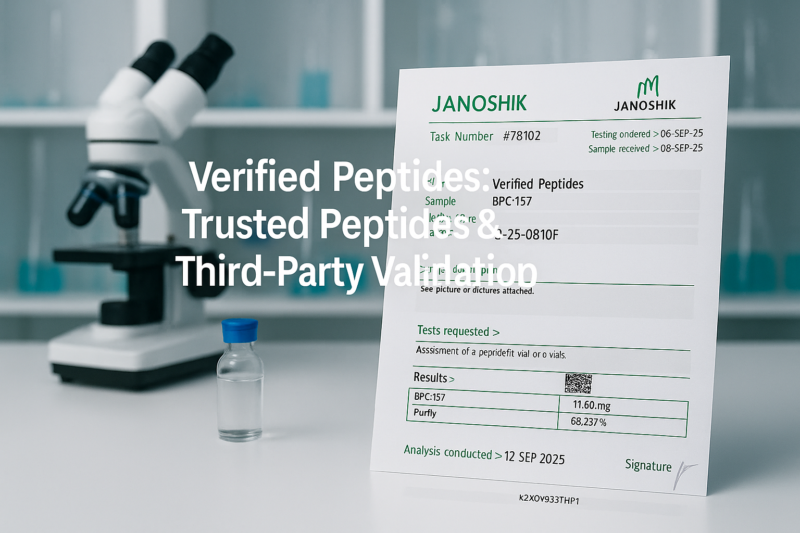
Along with HPLC and MS, specialized labs might utilize orthogonal methods for included accuracy. For instance, capillary electrophoresis can be used to divide really hydrophilic peptides or to ascertain results, and MALDI-TOF mass spectrometry can assist in mapping bigger or modified peptides. Many peptide manufacturers or vendors will supply a COA (Certification of Evaluation), for example our bpc 157 tb 500 blend, that consists of the pureness percent by HPLC and identity confirmation by MS for every set. Top-tier laboratories commonly report peptide purity well over 95%, regularly ≥ 98-99%, by utilizing cutting edge HPLC and MS evaluations. They likewise test both resources and completed peptide vials, which helps catch any kind of pollutants, destruction items, or formulation incongruities.In conclusion, understanding peptide pureness levels and qualities assists you make informed choices for your experiments. A peptide's pureness percent informs you how much of that sample is the actual bargain versus by-products, with common research study qualities being around 95% as much as 98-99% for extra pureness. Analytical HPLC and MS are your pals right here-- HPLC measures purity, and MS validates identity, with each other ensuring you understand what remains in your tube.
- It guarantees you that the peptide will certainly do well in experiments (thinking purity and identification are as stated), yet it likewise lugs the caution "Research Use Only." This phrase is normally published on the vial or documentation.It's possible to have a peptide that is, claim, 95% pure by HPLC and yet the internet peptide material is something like 70% of the powder's weight (the rest being water and salts).This method divides peptides from pollutants and measures both target peptides and contaminants, making certain high-quality examples for research.One of the most stringent quality, involving mindful HPLC filtration-- often multiple rounds-- and extensive QC.Hydrophobic peptides, very standard sequences, modified constructs, and closely relevant analogs can be reviewed with approach changes matched to their logical dangers.
The gold standard for gauging peptide pureness is high-performance liquid chromatography, globally abbreviated as HPLC. If you see a purity percent on a peptide product, it likely originated from an HPLC analysis. This matters because peptides are built one amino acid each time with solid-phase peptide synthesis (SPPS). At each step, there's a small chance that something fails-- an amino acid doesn't connect, the wrong alteration occurs, or a side reaction creates an unintentional result. Over a chain of 10, 20, or 40 amino acids, those small per-step mistake rates substance.
While peptide purity isn't the only factor, making use of inadequately characterized reagents is a recognized factor to irreproducible results. For a 10-residue peptide with 99.5% combining efficiency, you would certainly expect concerning 95% of the end product to be the unabridged series before filtration. For a 30-residue peptide at the same efficiency, that goes down to approximately 86%. This is why longer peptides are more difficult to create at high purity and normally cost more. Purity is the percentage of books in the delivery that have every page printed properly, in the right order, with no missing out on chapters and no added web pages stuffed in. A 95% purity indicates that out of every 100 "books" in your batch, 95 are perfect duplicates and 5 have some sort of error. Each peptide has a different anticipated molecular weight, so mass verification is not a generic badge; it is compound-specific proof. For a deeper identity-focused explanation, see Mass Spectrometry Peptide Verification. Identification testing validates that what was synthesised is actually the designated sequence.